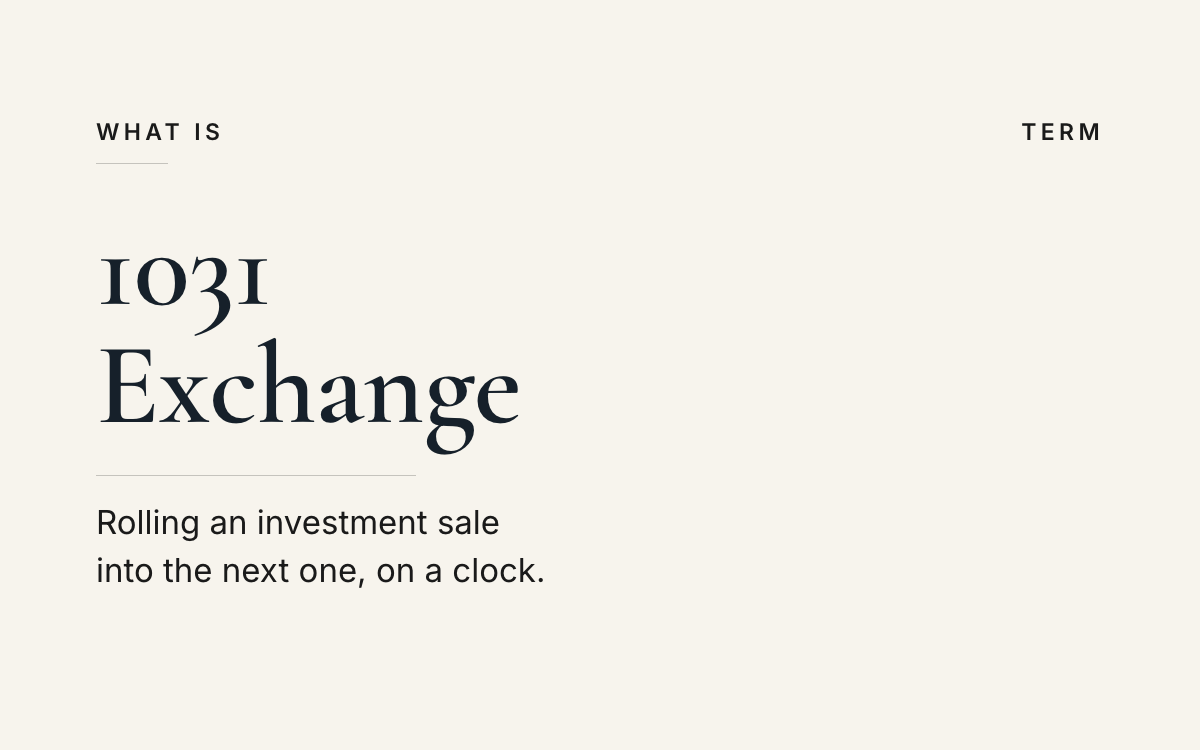
A 1031 exchange defers the tax,
with 45 and 180 day deadlines.
A 1031 exchange lets an investor sell an investment property and reinvest in a like-kind one without recognizing capital gains at the time of the sale. It runs on two strict clocks, 45 days to identify and 180 days to close.
- A 1031 exchange lets an investor sell an investment property and reinvest the proceeds into a like-kind property without recognizing capital gains at the time of the sale
- It defers the capital gains tax rather than cancelling it
- The IRS timelines are strict: 45 days to identify the replacement property and 180 days to close on it
- A qualified intermediary holds the proceeds, and that has to be arranged before the sale closes rather than after
Term. Written by The JK Realty Group.
A 1031 exchange, named for Section 1031 of the Internal Revenue Code, lets an investor sell an investment property and put the proceeds into a like-kind property without recognizing capital gains at the time of the sale. The word that matters is defers: the tax is carried into the next property, and it stays there until something ends the chain.
Two clocks run, and they both start when the first property closes. There are 45 days to identify the replacement property in writing, and 180 days to close on it. Those windows are strict, and the 45-day window overlaps the weeks a seller would otherwise spend looking. There is also a piece of mechanics that has to be handled before the sale rather than after it: a qualified intermediary holds the proceeds between the two closings. A seller who takes the money and then decides to exchange has generally already passed the point where it works.
Say an owner in Gloucester County is selling a small rental and wants to move into a larger one. If the intermediary is engaged before the closing, the day the sale settles is day one, the written identification is due at day 45, and the purchase has to close by day 180. That is a shopping window measured in weeks, which is why the search usually starts while the first property is still under contract rather than after it settles.
What to ask, and who answers it. Your tax adviser is the one to ask whether an exchange makes sense for your situation at all, what like-kind covers for your property, and what New Jersey treatment applies alongside the federal rules. That is a tax question, not a real estate one. Your qualified intermediary handles the mechanics and the paperwork between the two closings. Your agent can help you line the two transactions up so the calendar works, and getting the search started early is the part we can help with.
Our take
Both clocks start at closing, and the intermediary has to be in place before that closing happens. If you own an investment property you are thinking about selling, the tax conversation belongs before the listing rather than after an offer.
Thinking about selling an investment property? Let's talk.
Related: Investment Real Estate in South Jersey Commercial Real Estate in South Jersey
Want our South Jersey news in your Google results?
Add The JK Realty Group as a preferred source on GoogleGeneral information, not tax advice. Whether an exchange fits your situation, and what it would mean for what you owe, are questions for your own tax adviser. General information, not advice about any specific property. The JK Realty Group, brokered with OMNI Real Estate Professionals. Equal Housing Opportunity. See our Terms of Use for how we source and credit these posts.
Related Posts
The Atlantic City Expressway is getting a third lane
From the South Jersey Transportation Authority project website
Washington Township, NJ · photo Famartin, CC BY-SA 4.0