What the New Jersey exit tax is
and which sellers pay it
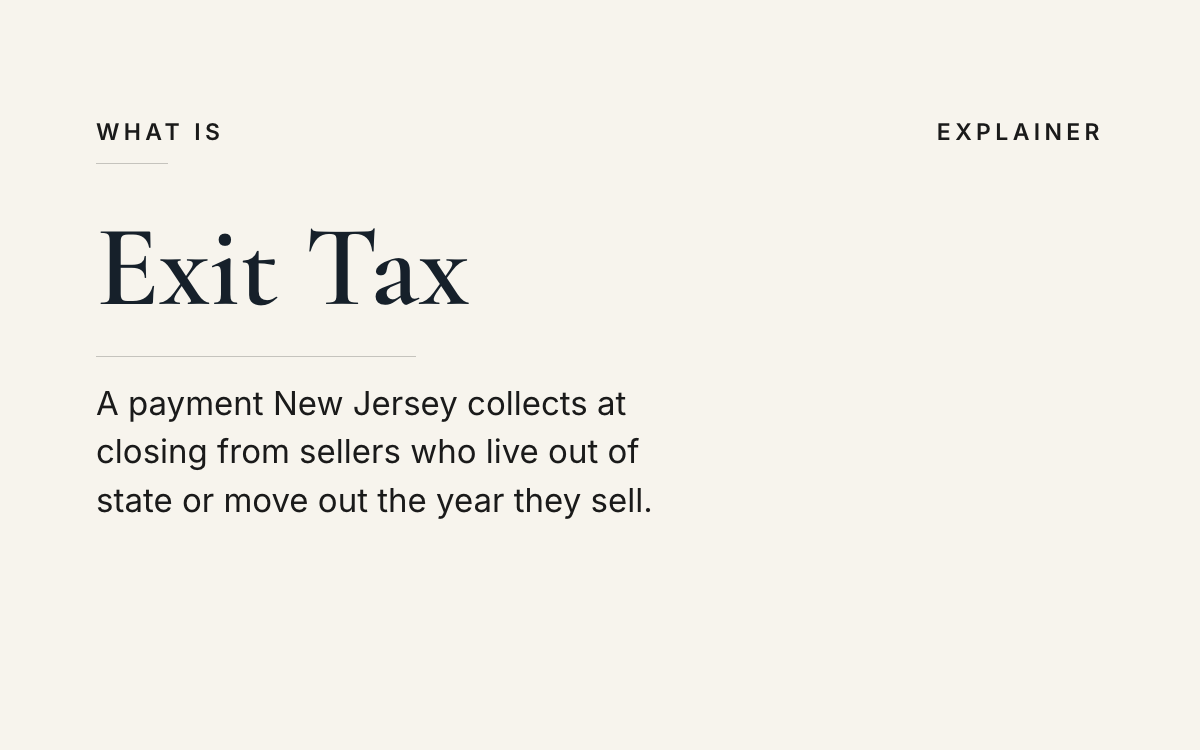
What people call the New Jersey exit tax is an estimated income tax payment collected at closing from sellers who live out of state or move out the year they sell. It is at least 2% of the sale price unless an exemption applies.
- New Jersey collects an estimated income tax payment at closing from sellers who live out of state, unless an exemption applies
- The payment is at least 2% of the sale price, even when the sale shows no profit
- If you move out of New Jersey the year you sell, the state treats you as a nonresident for this payment
Explainer. Written by The JK Realty Group.
What people call the New Jersey exit tax is an estimated income tax payment, collected at closing from a seller the state treats as a nonresident, unless an exemption applies. New Jersey does not tax you just for moving away. The county will not record the deed until it has the seller's state tax form and any payment that is due. It is a different charge from the realty transfer fee, and an exemption from that fee does not cover this payment.
The payment is at least 2% of the sale price, and it is collected whether or not the sale shows a profit. The payment can be more than the income tax the seller actually owes. Anything paid above that income tax comes back as a refund. The seller gets it by filing a New Jersey nonresident return for the year of the sale, or sooner by filing the state's refund claim form.
Residency here is not only about where you live on closing day. A homeowner who moves out of New Jersey in the year they sell is a part-year resident, and the state treats part-year residents as nonresidents for this rule, even if they live here today.
Exemptions are claimed on the state's seller residency form at the closing table. One exemption on the form covers a house the seller used only as their main home, as federal tax law defines it. Another covers an executor passing the property to an heir. Resident sellers sign the same form to confirm they are residents. The seller gives the completed form to the settlement agent, usually the buyer's attorney or the title company. A seller who qualified for an exemption but did not claim it at closing can still ask for the money back later on the state's refund claim form.
What should you ask? If you are selling this year and plan to move out of New Jersey, ask your accountant before closing which exemption, if any, fits your sale, and what the payment would be if none does. Questions about how the form applies to your situation go to a licensed New Jersey attorney. Your agent can help you plan ahead so the exemption question is answered before closing day. Nothing on this page is tax or legal advice about a specific transaction.
What to know
If you are selling this year and an exemption fits, you claim it on a state form at the closing table and no payment is collected. If you pay instead, the state later refunds what you paid above the income tax you actually owe.
Selling this year and moving out of state? Let's talk.
General information about the estimated income tax payment New Jersey collects at closing from sellers who live out of state or move out the year they sell. Which exemption fits your sale is a question for your accountant. General information, not advice about any specific property. The JK Realty Group, brokered with OMNI Real Estate Professionals. Equal Housing Opportunity. See our Terms of Use for how we source and credit these posts.
Related Posts
Gloucester County permits are behind last year
From the U.S. Census Bureau Building Permits Survey